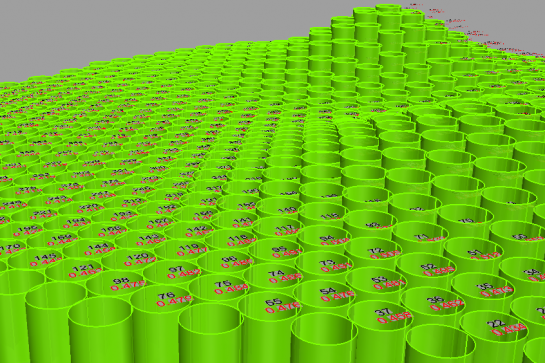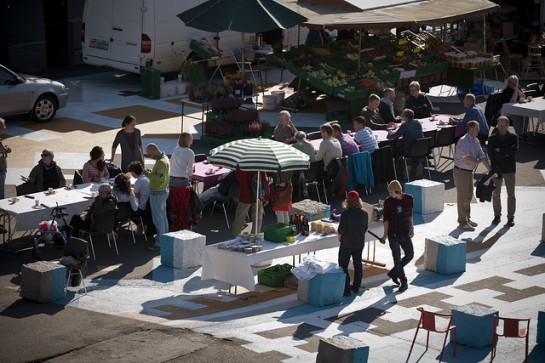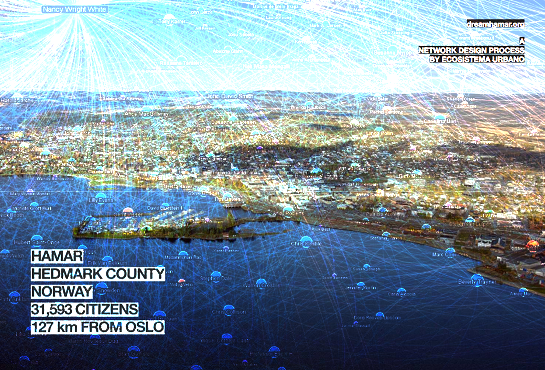
As architects regarding the city as a complex and multi-layered phenomenon, during the past years we have been facing deep change in the way we relate to urban issues. We have learned – by doing – that knowledge and creation are becoming hybrid and diffused phenomenons, transforming traditional, closed and fixed structures, into open and flexible network structures. The image above is a visualization of dreamhamar process based on an image by Ecosistema Urbano and a network visualization by Nancy White.
READ MOREChristoffer Horsfjord Nilsensee /
watch his wonderful photos on flickr
This morning my colleague Christopher in Hamar, Norway is taking care of printing the poster and flyers we have designed for LIGHTHAMAR event, taking place in the main square of Hamar next Saturday 3rd of December at 15:30.
This is the last big event of a three month participation process we have been coordinating from EcosistemaUrbano, in order to debate the future of the city center of Hamar.
more info at dreamhamar.org
READ MORE
image above: focusmanifesto.com
About one month ago I wrote this post for dreamhamar.org
As I have been working on network design methodology for the dreamhamar process, in the following text I explain why I think that a minimalist approach can help with the management and the coordination of a complex process like dreamhamar.
·
Smile, breathe and go slowly is the subheader of zenhabits blog, one of the top 25 blogs and top 50 websites in the world.
Minimalist Leo Babauta, author of the blog, writes about finding simplicity in the daily chaos of our lives. It’s about clearing the clutter so we can focus on what’s important, create something amazing and find happiness.
READ MOREDREAMHAMAR è un processo di network design applicato alla creazione di uno spazio pubblico per la città di Hamar, in Norvegia.
Una delle caratteristiche più importanti della metodologia network design è la realizzazione di prototipi a scala reale sulla piazza tramite eventi, installazioni ed azioni urbane.
During last months I’ve been working hard for dreamhamar network design process to transform the design of a public space in Norway into a collective dream. While I was working from Ecosistema Urbano in Madrid as a member of the DIGITAL LAB TEAM, another team was moving to Hamar in order to coordinate onsite activities.
A few days ago Noa, one of my colleagues in Hamar, published “Learning from Hamar”, a short essay about her 2 months experience in Norway. I think it is a great report and a touching text; it explains how a network design process goes beyond the pure participation process, by building a networked community (both local and international) to work on a mutual case.
READ MOREvideo : sessione network design con il sociologo Andrés Walliser, direttore del workshop online PUBLIC SPACE AND PEOPLE
Qualche giorno fa ho invitato un collega, conosciuto a Torino in occasione dello Smart Building Workshop, a partecipare agli workshop online che sto coordinando nell’ambito del processi di progettazione partecipativa dreamhamar
Tutto il progetto, secondo la metodologia network design, è ispirato a valori di trasparenza, orizzontalità e apertura.
Se sei un architetto, un creativo, o se semplicemente sei interessato ai processi di creazione orizzontale e distribuita, ecco le sessioni online alle quali potrai partecipare durante la settimana di ottobre tramite il nostro DIGITAL LAB

“Ecological Reconfiguration of an Urban Center” par l’agence Ecosistema Urbano
Cela m’a fait plaisir de trouver un article sur urbanews.fr, écrit par Bruno Morleo, qui cite mon blog en le décrivant comme un véritable stimulateur d’idées italo-anglo-franco-espagnol. L’article porte le titre “Le mystérieux Génie Urbain sauvera le monde” et contient des références importantes sur l’innovation urbaine et les tendances sociales de l’architecture contemporaine.
Souvent je ne suis pas sur que rédiger un blog en 4 langues soit très efficace, mais cette citation confirme peut-être que cela a un intérêt, surtout dans le contexte d’un réseaux internationelle que je développe depuis quelques années.
Alors, mon post d’aujourd’hui, il sera en français :)
READ MORE

In 2 days we start dreamhamar‘s three-month long participation phase of workshops, lectures and model building where residents are invited to dream and to discuss the future of Stortorget Square, and it is marked with a big opening party next Saturday, September the 17th at 2:00 pm !
Here are some graphic works I realized with Ecosistema Urbano team for the opening event.
-

USDE+DREAMHAMAR | imagen basada en una foto del álbum “a day in ecosistemaurbano” de @iomanuele (flickr)
-
En febrero-mayo 2011 he estado diseñando y coordinando en Ecosistema Urbano el proyecto de educación expandida Urban Social Design Experience, una serie de cursos aumentados – llamados experiences - que pretenden presentar enfoques y líneas de trabajo innovadoras en el campo de la gestión y la cultura urbana.
Aquí abajo podéis ver una presentación de los experiences con los fantasticos dibujitos de Jaime.
READ MORE
images above based on flickr pictures by Amber Case and Smite Me
-
I am very happy to share with you a post originally written for dreamhamar blog by our blogger and community manager Marisa, with whom I am collaborating in Ecosistema Urbano.
As one of my principal role within dreamhamar process is to develop theory and methodology for this architectural participation project, a few month ago I wrote What is Network Design Methodology? (originally in Spanish and translated in English by Marisa, thanks!) where I explained which methodology we were going to use for dreamhamar.
When Marisa was working to the English version of the article, she started detesting me :)
In the following text she explains why and she “translates” my words into an understandable language also for a non-architect. I sincerely invite you to read it: very funny and clear.
Thanks again Marisa for this brilliant explanation of network design methodology for participation processes!
—
I remember when Francesco Cingolani first tried to explain me whatnetwork design was. I remember looking puzzled. I remember going home wondering why two simple words had to combine in a concept so difficult to grasp.
READ MORE